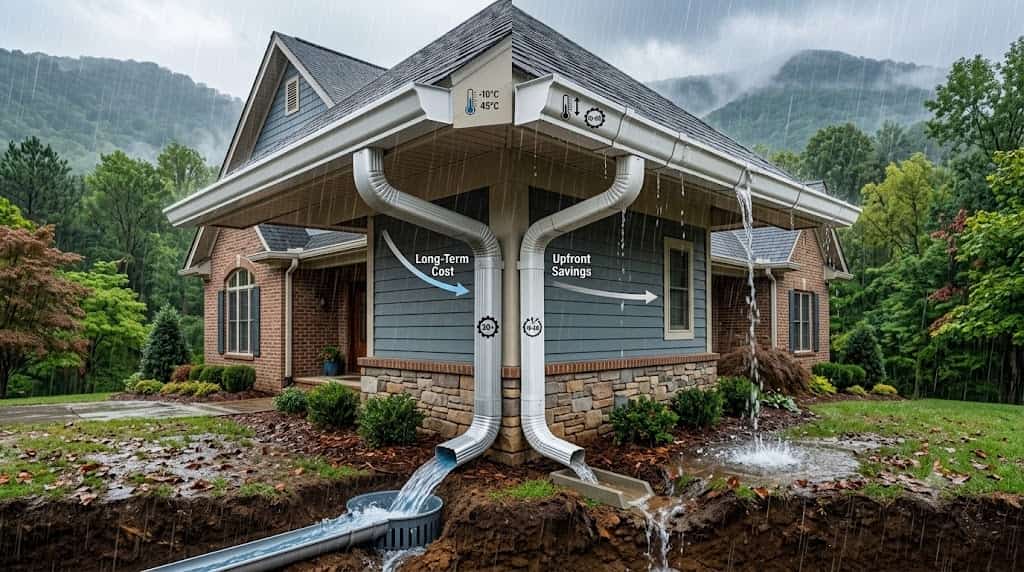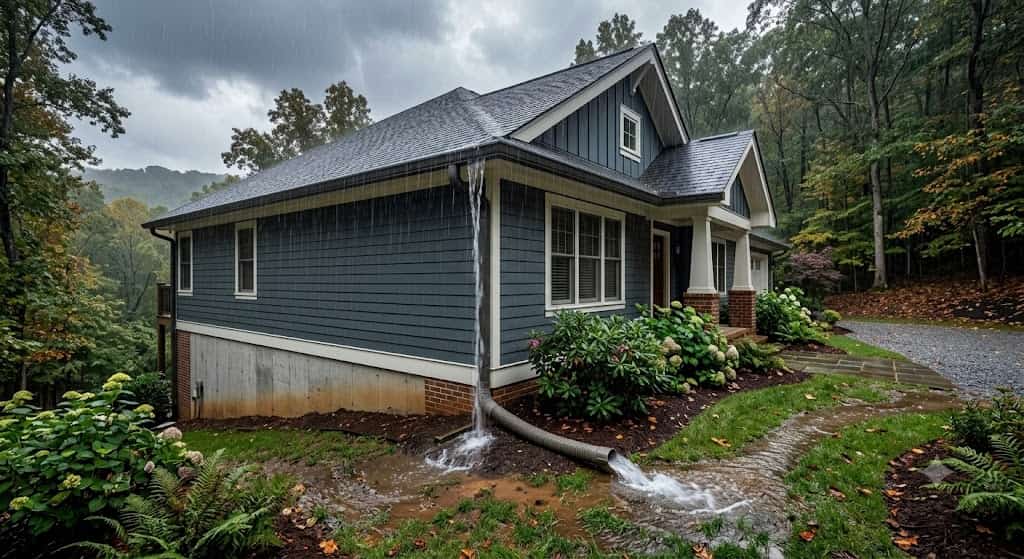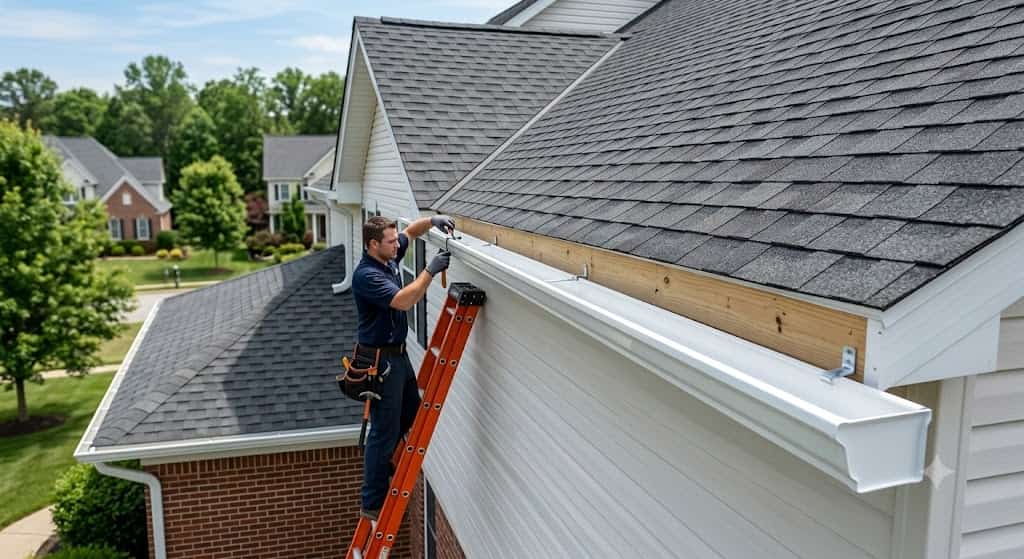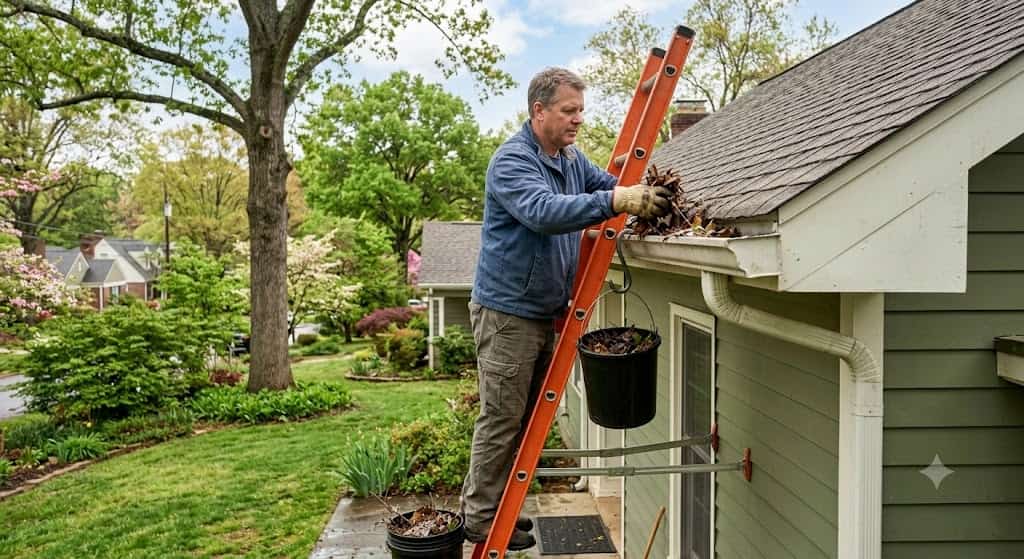
Storms can put a lot of stress on your gutter system. Heavy rain, strong wind, falling branches, roof debris, and overflowing water can all affect how well your gutters perform. Even if your gutters looked fine before the storm, damage can appear quickly once the system is tested by severe weather.
For Chattanooga homeowners, checking for storm-damaged gutters after heavy rain is an important part of protecting the home. Gutters help move water away from the roofline, siding, foundation, basement, crawl space, landscaping, and walkways. When they are damaged, clogged, or loose, water may drain in the wrong places and create costly problems.
Here are the most common gutter problems to look for after storms in Chattanooga.
Why Storms Are Hard on Gutters
Your gutters are exposed to changing weather year-round, but storms can create sudden strain. Heavy rain increases water volume, wind pushes debris into the system, and branches can strike or bend gutter sections.
Storms can cause:
- Sagging gutters
- Loose fasteners
- Leaks at seams and corners
- Clogged downspouts
- Overflowing water
- Bent or dented sections
- Detached gutter runs
- Water is pooling near the foundation
- Roofline and fascia damage
After a storm, a quick inspection can help identify issues before they become more serious.
1. Sagging Gutters
Sagging is one of the most common signs of gutter trouble after a storm. When gutters fill with rainwater and debris, the added weight can pull the system away from the roofline.
Sagging gutters may be caused by:
- Wet leaves and debris buildup
- Standing water
- Loose hangers
- Weak fasteners
- Improper gutter slope
- Storm impact
- Aging materials
If gutters are sagging, water may not flow properly toward the downspouts. Instead, it may sit in low areas or overflow along the roofline. Over time, sagging can lead to leaks, damage to the fascia, and detached gutter sections.
2. Leaks at Seams, Corners, or End Caps
After heavy rain, check for water dripping from areas where it should not be escaping. Leaks often appear at seams, corners, end caps, or small cracks in the gutter channel.
Common leak signs include:
- Water dripping after the rain has stopped
- Wet siding below the gutters
- Stains on brick or exterior walls
- Water marks under gutter joints
- Soft or rotting fascia boards
- Small puddles below a leak point
Even a small leak can lead to bigger issues if it continues through the rainy season. Gutter repair may be needed to reseal, realign, or replace damaged sections.
3. Loose Fasteners and Pulling Gutters
Strong winds, heavy water flow, and debris weight can loosen the hardware that secures gutters to the home. If the fasteners begin to fail, the gutters may pull away from the fascia.
Warning signs include:
- Gaps between the gutter and the roofline
- Visible loose screws or brackets
- Sections hanging lower than others
- Gutters moving during the wind
- Water running behind the gutter
- Fasteners pulling out of fascia boards
Loose gutters should be repaired quickly. If the system continues to pull away, it can damage the roofline and eventually detach from the home.
4. Clogged Gutters From Storm Debris
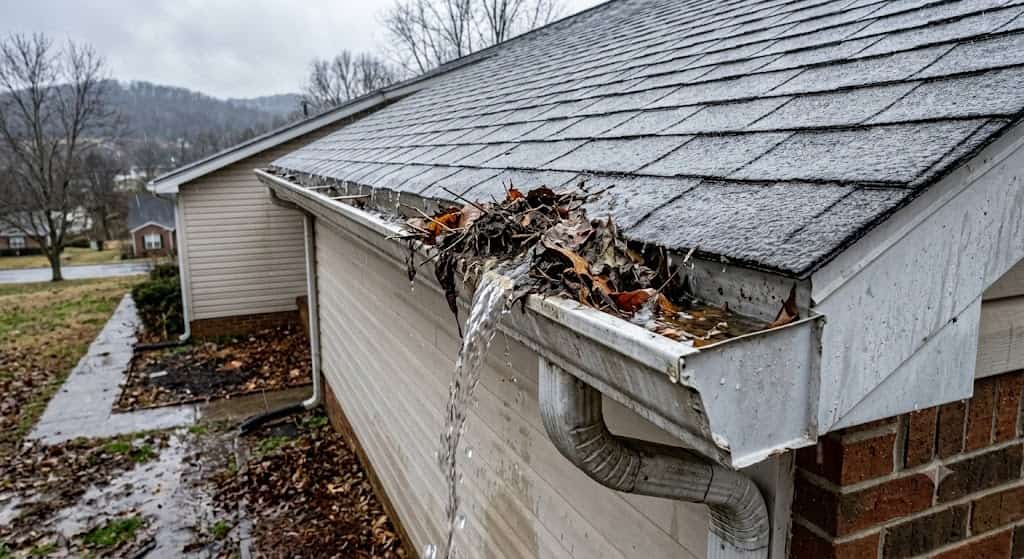
Storms often wash leaves, twigs, pine needles, roof grit, and branches into the gutters. This debris can block water flow and create drainage problems.
Clogged gutters can lead to:
- Water overflow
- Standing water
- Sagging sections
- Downspout backups
- Roofline moisture
- Pest problems
- Foundation water issues
Even if the top of the gutter looks clear, clogs can hide near corners or downspout openings. After a storm, homeowners should check both the gutter channel and the downspouts.
5. Blocked Downspouts
Downspouts are responsible for carrying water away from the home. If they become blocked during a storm, water can back up into the gutters and overflow.
Signs of a clogged downspout include:
- Little or no water coming out during rain
- Water spilling near the downspout opening
- Gurgling sounds during heavy rain
- Debris is packed at the top of the downspout
- Water is pooling near the foundation
- Overflow in one specific gutter section
Downspout clogs should be cleared as soon as possible to restore proper drainage and prevent water from collecting near the base of the home.
6. Gutter Overflow During Heavy Rain
Overflow is a clear sign that water is not moving through the system correctly. During a strong Chattanooga storm, gutters need to handle large amounts of rainwater quickly.
Overflow may be caused by:
- Clogged gutters
- Blocked downspouts
- Poor gutter slope
- Undersized gutters
- Sagging sections
- Damaged gutter runs
- Too much debris buildup
When water spills over the sides, it can damage landscaping, stain siding, wash away mulch, and collect near the foundation. Repeated overflow should be inspected by a professional.
7. Bent or Dented Gutter Sections
Strong winds and falling branches can bend or dent gutters. While a small dent may seem cosmetic, it can affect how water flows through the system.
Bent gutters may cause water to collect in one area, overflow, or leak at weakened points. If a section is severely damaged, it may need to be repaired or replaced to restore proper function.
After a storm, look for:
- Dented gutter runs
- Crushed downspouts
- Twisted sections
- Bent corners
- Gutters no longer aligned with the roofline
- Visible impact marks from branches
8. Water Pooling Near the Foundation
One of the most important things to check after a storm is where the water drains. If gutters or downspouts are not working properly, water may collect around the foundation.
Foundation-area pooling can be caused by:
- Overflowing gutters
- Disconnected downspouts
- Short downspout extensions
- Blocked drainage paths
- Poor gutter slope
- Leaking sections
Water near the foundation can contribute to soil erosion, crawl space dampness, basement moisture, and foundation concerns. Proper gutter drainage helps protect the structure from water damage.
9. Fascia and Roofline Damage
Storm-damaged gutters can affect the areas they are attached to. When water overflows, leaks, or runs behind the gutter, it can damage fascia boards, soffits, trim, and roof edges.
Look for signs such as:
Peeling paint
- Soft wood
- Dark stains
- Mildew growth
- Gutters pulling away from the fascia
- Water dripping behind gutters
- Rotting roofline materials
If the fascia is damaged, the gutter system may remain insecure until the underlying issue is addressed.
What to Do After a Storm
After heavy rain or wind, it is a good idea to walk around your home and inspect the gutter system from the ground. Avoid climbing ladders during wet or windy conditions.
Use this quick post-storm checklist:
- Look for sagging or uneven gutters
- Check for water stains on siding
- Look for visible debris in gutters
- Make sure downspouts are connected
- Watch for water pooling near the foundation
- Check for loose or hanging sections
- Look for bent or dented areas
- Observe the gutters during the next rain
- Schedule service if you see leaks or overflow
If the gutters are high, difficult to access, or visibly damaged, contact a professional instead of trying to handle the issue yourself.
Can Storm-Damaged Gutters Be Repaired?
Some storm-related gutter problems can be repaired. If the damage is limited to a small area, repairs may be enough to restore proper drainage.
Gutter repair may help with:
- Small leaks
- Loose fasteners
- Minor sagging
- Clogged downspouts
- Misaligned sections
- Damaged corners
- Disconnected downspouts
- Small cracks or holes
However, if the system is old, badly bent, repeatedly overflowing, or pulling away in several areas, replacement may be the better long-term option.
When Gutter Replacement May Be Needed
Storm damage can sometimes reveal that an old gutter system is no longer reliable. If multiple sections are damaged or the gutters cannot handle heavy rain, replacement may offer better protection.
Gutter replacement may be needed if you notice:
- Large cracks or holes
- Severe sagging
- Multiple leaks
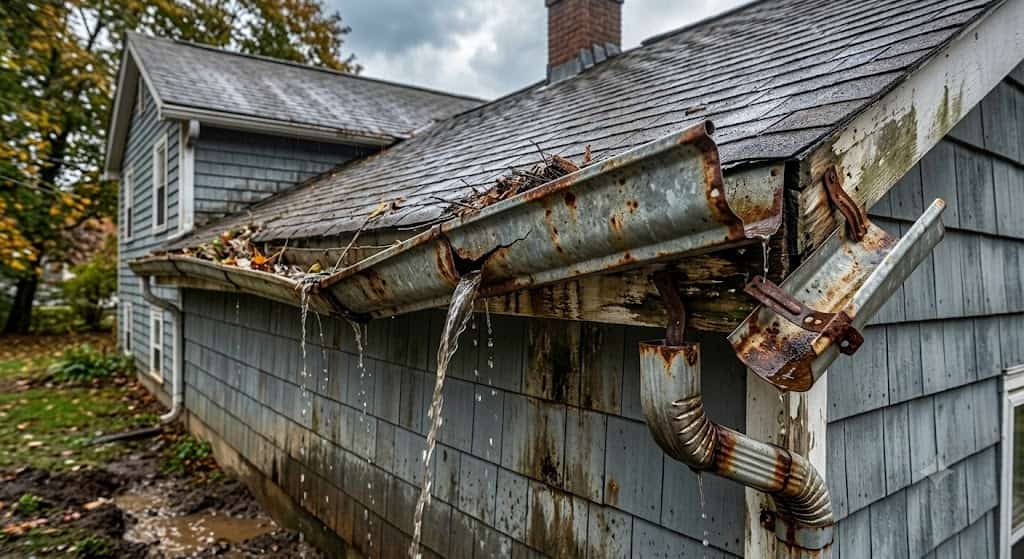
- Rust or corrosion
- Frequent overflow
- Detached sections
- Poor drainage design
- Repeated repair needs
A seamless gutter system can be a smart upgrade because it has fewer joints, a cleaner appearance, and better leak resistance than many older sectional systems.
How Gutter Guards Can Help After Storms
Gutter guards can help reduce the amount of debris that enters the gutter system during storms. While they do not eliminate maintenance entirely, they can reduce the risk of frequent clogs and make cleaning easier.
Gutter guards may be helpful for homes with:
- Trees close to the roofline
- Frequent leaf buildup
- Pine needles
- Recurring downspout clogs
- Storm debris problems
- Hard-to-reach gutters
For Chattanooga homeowners, gutter guards can improve water flow during storms and reduce the risk of overflow caused by debris.
Do Not Ignore Storm-Damaged Gutters
Gutter problems after storms may seem minor at first, but they can lead to serious water damage if ignored. A loose fastener, small leak, or clogged downspout can quickly become a larger issue during the next heavy rain.
Prompt service can help protect your:
- Roofline
- Fascia and soffits
- Siding
- Foundation
- Basement or crawl space
- Landscaping
- Walkways and driveways
Catching storm damage early can help prevent more expensive repairs later.
Protect Your Chattanooga Home After Storms
Chattanooga storms can be tough on gutter systems. Heavy rain, wind, and debris can cause sagging gutters, leaks, loose fasteners, clogs, and overflow. After severe weather, homeowners should take time to inspect their gutters and schedule service if something does not look right.
A clean, secure, and properly draining gutter system is essential for protecting your home from water damage.
Contact Dyna-Tech Gutter Solutions
Dyna-Tech Gutter Solutions provides seamless gutter installation, gutter guards, gutter repair, and gutter cleaning and maintenance services for Chattanooga, North Georgia, and the surrounding areas.
If you notice storm-damaged gutters, leaks, sagging, clogs, or overflow after a Chattanooga storm, contact Dyna-Tech Gutter Solutions today to schedule gutter service and keep your home protected.